
Crete: Gavdos, the Tiny Island
Sitting On The Edge Of Europe: The Long Story Of Little Gavdos

If you ever want to feel that you have walked right to the bottom of Europe, you go to Gavdos. It is such a small island that it barely shows on most maps, hanging like a drop of rock and scrub below the south coast of Crete. Yet the moment you step off the ferry at Karave and put your feet on the quay, you realise you have arrived in a place where the world seems to loosen its grip a little.
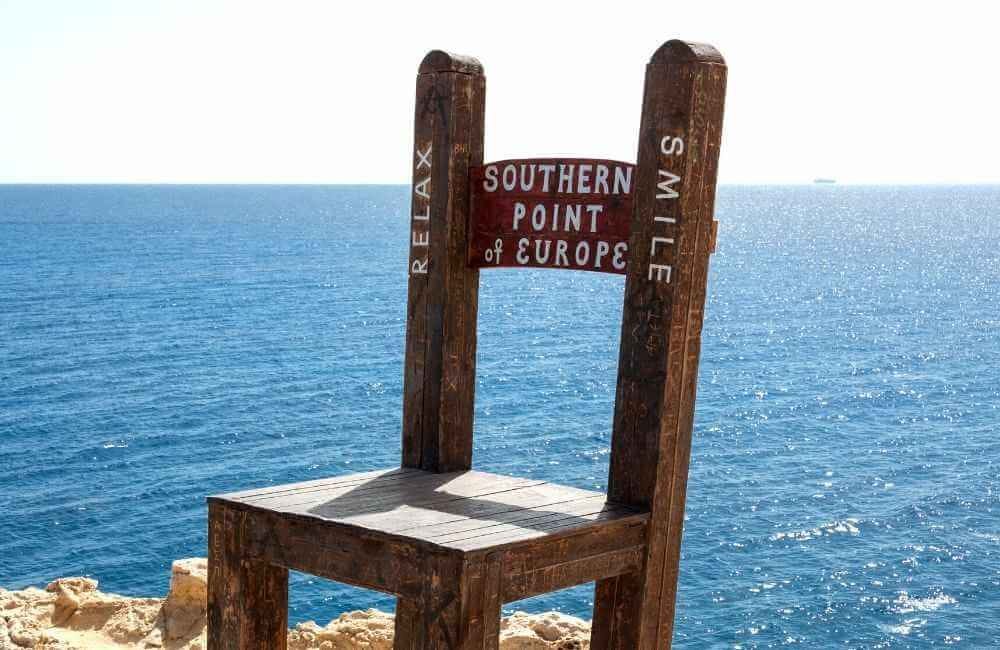
Gavdos is not only beaches and barefoot campers. It carries stories from the Stone Age to the nuclear age. Myths of Odysseus and Calypso. Exiles banished here in chains. Wartime fear. Deserted houses and half-forgotten terraces. Russian scientists who survived Chernobyl and came all the way to this tiny island at the edge of Europe to start again, and who even built the huge wooden chair that now looks out over the Libyan Sea.
It is a lot of history and emotion packed into a rock that you can cross on foot in a day. Let us wander through it at an easy pace.
A small island with a big horizon
Gavdos is only a few dozen square kilometres in size. It feels less like a classic island and more like a scattered village that pushed itself out of Crete and drifted south. The land rises gently rather than dramatically. The highest point is just over 300 metres, so instead of sharp peaks you get long, low ridges, shallow valleys, and slopes covered with scrub, junipers and pines.
The earth is light and crumbly. Centuries of cutting and grazing have stripped much of the original forest, so in many places the rock shows through. Old stone terraces climb the hillsides, reminders of times when every patch of soil was used, and nothing was wasted. In the heat of summer, the colours fade to pale straw and dusty green. In winter, the island can surprise you with fresh grass and small flowers when the rain finally comes.
The climate feels a little more African than Greek. Gavdos sits further south than Crete, closer to Libya than to Athens. In summer, the sun can be fierce and direct. At midday, the light is so bright that the sea turns almost white and the shadows are razor sharp. In winter, storms roll in one after another. The wind slams into the cliffs, and the ferry can stay tied up for days. Islanders know what it means to be cut off in a very literal way.
On paper, the island has a little over a hundred registered inhabitants. In reality, the permanent winter population hovers around a few dozen people, scattered between Kastri, Vatsiana, Karave and a few houses near the lighthouse and the beaches. In summer, those numbers swell as visitors arrive with tents and backpacks. Some stay for a few days. Others settle in for weeks or even months, until the first autumn storms gently push them back towards Crete.
Gavdos is also the southernmost inhabited point of Europe. That makes it sound grand, yet the reality is simple. At its lowest tip, at Cape Tripiti, the rock narrows into a little finger that reaches into the Libyan Sea. Natural stone arches have been carved here by the waves. Above them, perched on the cliff, stands a huge wooden chair. Sit in that chair, and you are literally at the bottom of Europe, facing south, with nothing but water between you and Africa. It is playful and serious at the same time, and that mood fits the island very well.
An island wrapped in names and stories
Because Gavdos lies where it does, out on its own in the Libyan Sea, sailors and storytellers have been noticing it for a very long time. Over the centuries, it has collected a basket of names. Ogygia. Clauda. Cauda. Gaudos. Gondzo. Gotzo. Each version tells you something about who sailed past and who was writing the maps.
In Greek myth, Ogygia is the island home of the nymph Calypso. It is here, in Homer’s telling, that Odysseus is held for seven years, tempted to give up his journey home. The island is painted as remote and hard to reach, a place that lies beyond the usual paths. That description has prompted many people to look for a real Ogygia. Gavdos, lying alone in the Libyan Sea, has become one of the main candidates. Whether or not it really is Calypso’s island hardly matters now. The idea has stuck. Locals and visitors talk easily of Calypso when they sit by the sea, and the thought of Odysseus staring at the same horizon fits the mood of the place.
The island pops up again in a very different kind of text. In the Acts of the Apostles, in the New Testament, there is a practical little passage about a ship caught in a storm. On board is Paul, on his way to Rome as a prisoner. The sailors, struggling in high seas, pass to the sheltered side of a small island called Cauda and take emergency measures to save the vessel. Many people believe that Cauda is Gavdos. It is only a short mention, but it shows that navigators of that time already counted on this tiny speck of rock as a refuge in bad weather.
Later, medieval charts record Gaudos and similar names. Arab sailors, Venetian captains and Ottoman officials in turn marked the island on their sea maps. For some, it was a hazard to avoid. For others, it was a useful point of reference. Ships heading from North Africa to Crete or the Peloponnese knew its shape on the horizon. It was a fixed point, an anchor for their mental map of the sea.
Beneath these written traces lies a much older human presence.
From stone age visitors to a Bronze Age outpost
Archaeological work on Gavdos shows that people have been using the island for thousands of years. Stone tools and other finds suggest that there were visits or seasonal stays as far back as the late Stone Age. The sea, even then, was not a barrier but a road. Early seafarers could cross from Crete or the mainland in small boats, land on Gavdos, hunt, fish and gather resources, then move on.
In the Bronze Age, the island’s role grew stronger. On the northern slopes, at a place called Katalymata, archaeologists uncovered the remains of a substantial building complex. The layout and material suggest Minoan influence. This was no random cluster of huts. It looks like an organised settlement. There are signs of storage, working areas and living spaces. Pottery and tools show links to southern Crete and the wider Minoan world.
In that period, the sea bound together Egypt, Crete, the Levant and Cyprus. Ships carried copper, tin, pottery, olive oil and ideas. Gavdos sat right on a useful line between southern Crete and ports further south. It offered shelter, water and maybe a place to leave a small permanent presence that could support coastal trade. If you stand above Katalymata on a hot day and look north to Crete and south to open water, it is easy to imagine small Minoan boats and their crews constantly coming and going.
Later, under Roman rule, this function did not disappear. The Romans were very skilled at making use of marginal land. They appear to have cut timber on Gavdos, grazed animals, planted crops and kept a few installations running. The evidence suggests that the island was not rich, but it was active. Over generations, the forests retreated under the combined pressure of farmers and shipbuilders. The bare slopes you see today are in part the long echo of those decisions.
In late antiquity and early Byzantine times, life on Gavdos may even have peaked. Some estimates put the population at several thousand. However precise the figures are, it is clear that there were many more people here than now. Small churches appeared. Houses and terraces multiplied. The island became a busy frontier post of the empire, watching over shipping lanes and contributing its share of grain, wool and fish.
Scattered around the island today are chapels and church ruins from those centuries. Some stand freshly whitewashed, with bright flowers at the door. Others are crumbling shells with faint traces of icons on the walls. Visit enough of them, and you start to feel how long people have been lighting candles on this rock and asking for protection on their journeys.
Pirates, Saracens and slow decline
From the Middle Ages onwards, the fortunes of Gavdos rose and fell with the powers that battled over Crete and the wider region. Byzantine fleets, Arab raiders, Venetian convoys and Ottoman squadrons all crossed and re-crossed the waters around the island.
The name of one of its main beaches, Sarakiniko, preserves a memory of a dark chapter. Sarakiniko means “of the Saracens”. Arab raiders used the island as a base to launch attacks on Crete and on passing ships. From the safety of its coves, they could repair vessels, share out spoils and prepare for the next raid. For coastal villagers on Crete, the outline of Gavdos on the horizon was a warning as well as a landmark.
Later came other pirates, including the feared Barbarossa. The sheltered bays on the western and northern coasts were perfect hiding places. When you look down today from a headland at Lavrakas or Potamos and see the calm curve of sand and sea, you can imagine lean galleys pulled up there and rough crews waiting for news of rich targets.
Venetian rule brought Gavdos more firmly into an organised maritime system. Taxes were collected. Patrols were planned. The island was part of a chain of lookouts that guarded the sea routes. Yet it remained small and peripheral. Its main use was as a place to watch and a place to cut wood.
In the seventeenth century, when the Venetians finally lost Crete, the island passed to the Ottoman Empire. Under Ottoman rule, it was known as Gondzo. Records from the nineteenth century point to a population of a few hundred people. That is enough to sustain several villages, but it is a fraction of the early medieval high point. The long decline had begun.
Life here was always hard. Water was scarce. The soil was thin. Opportunities elsewhere grew. As shipping changed and steam replaced sail, Gavdos mattered less as a staging post. Its coves were useful mostly for fishermen. Bit by bit, families drifted away to Crete or the mainland, and the terraces fell silent.
Island of exiles and wartime shadows
The twentieth century brought a new and rather harsh role for Gavdos. The modern Greek state, like several others at the time, used remote islands as places to exile political opponents. In the 1930s, hundreds of left-wing activists and communists were sent to outposts such as Ikaria, Agios Efstratios and Gavdos.
On Gavdos, more than two hundred and fifty men were exiled. Some later became prominent in the Greek resistance and in the civil war. Here, they lived in basic huts and shared rooms, worked on public projects, read, argued and tried to keep their spirits up. Local families sometimes helped them with food and company. For the islanders, these years added a new layer of memory to familiar hills and buildings. A ruined house might still be pointed out as “where the exiles stayed”. A path might be remembered as “where the guards walked”.
Then came the Second World War and the Battle of Crete in 1941. As German forces advanced, Allied command tried to evacuate troops from southern Crete. Some evacuation routes involved Gavdos as a stepping stone on the way to Egypt. After the German victory on Crete, the island fell under Axis control.
The old lighthouse on the northwestern point of Gavdos played its part in that story. Built in the late nineteenth century, it once boasted one of the strongest beams in the eastern Mediterranean. In wartime, it became a target and was damaged. In later decades, the building slipped into disuse as navigation technology moved on. Only in very recent years has it been brought back to life in a gentler way, with a small café and a display about its history. The beam is now a modern automatic light. The surrounding rooms that once rang with the sound of machinery and storm warnings now fill with the clink of cups and the soft conversation of visitors watching the sunset.
Leaving the rock and coming back again
After the war, the wider story of rural Greece hit Gavdos in a very direct way. Across the country, people left mountain villages and remote islands in search of work and a more comfortable life. The same happened here, only more intensely. The state even encouraged Gavdiotes to exchange their land on the island for property on Crete. Many accepted and settled in places such as Paleochora, where neighbourhoods still carry the name Gavdiotika.
By the 1960s and 1970s, the permanent population of Gavdos had fallen to only a few dozen. Houses stood empty. Cisterns cracked. Terraces slid slowly back into scrub. In winter, the island could feel almost deserted. It would not have been surprising if it had ended up completely abandoned.
Yet that never quite happened. A stubborn core of families stayed on. Others returned in old age to repair family houses and look after land. Goats still wandered across the slopes with their bells ringing. Bees still worked the thyme flowers. Islanders still lit candles in their churches and kept an eye on the weather and the ferry timetable. Gavdos held on in the gaps between depopulation and survival.
An island that became a symbol
In the 1990s, this tiny island suddenly found itself in the middle of a diplomatic spotlight. Disputes between Greece and Turkey over the sovereignty of islets and sea zones in the Aegean made headlines. Gavdos, although far to the south, became a symbol of the extent of Greek and European territory.
Greek leaders visited the island to underline its importance. There was talk of development, investment, and new infrastructure. Cameras followed ministers up dusty tracks that usually only saw pickup trucks. For a few days, life on Gavdos was a national story. Then the focus moved on again.
Some promises did lead to real improvements. Electricity supply slowly became more stable. A telemedicine unit was set up, even if at first it suffered from a lack of power and equipment. The island gained at least a basic level of services that made year-round life easier. Yet it kept its rough edges. Roads remained narrow and patched. Supplies could still run short. The feeling of being far away from everything did not disappear.
Gavdos today, between simplicity and pressure
Arrive on Gavdos now, and you find an island with a very particular balance. On one side, there is the permanent community, small but rooted. On the other there is the seasonal wave of visitors who come precisely because there is not much here.
The ferry brings you into Karave, a modest harbour tucked into a rocky cove. There is a ramp, a few buildings, some parked cars, and a tiny cluster of tables where coffee and food appear with a smile. From there, a single narrow road climbs the hillside towards Kastri.
Kastri is the main settlement. A town hall, a school, a shop, a café, a church. Simple houses, some freshly painted, others weathered and patched. Chickens scratch in courtyards. Old men sit in the shade and talk. Children on bicycles cut across the street. It is a village that could almost be anywhere in rural Crete, except that the sea is never far from view, and you know there is no next village beyond the horizon.
Branching off from Kastri, the road leads towards Sarakiniko, to the lighthouse, and to Vatsiana and the southern parts of the island. The asphalt gives way here and there to rougher stretches. Dust rises behind passing vehicles. Goats step calmly aside.
Down at Sarakiniko, you find the most relaxed little hub of island life. A sweep of pale sand. Tamarisk trees. A line of tavernas and rooms that stay open through the summer. Tents tucked into the shade. People moving slowly between sea, shade and food. At night, lights from the verandas cast a warm glow over the beach. There is often music, sometimes live, sometimes just someone with a guitar. Time bends a little.
Further north, at Agios Ioannis, the feel is wilder. You leave the last parked cars behind and walk across the dunes to reach the beach. Behind the shore, low hills and juniper trees create a soft backdrop. This area has become famous among free campers and people who like to live simply. Hammocks hang between trees. People build small temporary shelters and cook on portable stoves. Days blend into each other. Morning swims. Long conversations. Nights under the Milky Way. The freedom is real, but so are the risks to the fragile landscape, and there is an ongoing tension between the desire to protect the dunes and the attraction they hold.
On the western side, beaches like Lavrakas and Potamos reward those who like a bit of effort. There are no facilities, no official shade, no quick way out. You walk there, carrying what you need. When you arrive, the quiet feels deeper because you have had to earn it.
Higher up, the lighthouse area is one of the island’s great viewpoints. The old building has been restored enough to host a tiny café and a simple exhibition. From the terrace, the Libyan Sea spreads out below you. On clear days, you can see the curve of Gavdos itself and, far beyond, the blurred outline of Crete. It is a good spot to feel the geography of everything you have been reading about, laid out in real space.
A strange new chapter: the Russians of Tripiti and the big wooden chair
Among all the stories of ancient mariners, pirates and exiles, Gavdos has collected a much more recent tale that feels almost like something from a novel. It belongs to the southern tip of the island, to Cape Tripiti, and to that huge wooden chair that has become a kind of unofficial symbol of Gavdos.
The chair did not just appear as a whimsical art project. It was built by a small group of Russian scientists and engineers who made Gavdos their home after the Chernobyl disaster.
One of them was a nuclear physicist who had worked in the Soviet nuclear sector and had been exposed to radiation during the Chernobyl aftermath. Like many who went through that time, he left with health problems and a deep sense that he needed to change his life. Around him gathered a circle of other specialists from scientific and technical backgrounds. Physicists. Engineers. A chemist. A geologist. Even a psychoanalyst. All people who had spent years in demanding, sometimes secret, work that touched on nuclear power and high technology.
They came to believe that if they wanted to heal, or at least slow the damage, they needed to find a place with clean air and a quieter rhythm. Somewhere far from big cities and industrial zones. Somewhere that might also hold a deeper symbolic meaning.
Gavdos drew them in. The southernmost tip of Europe. An island tied to Greek philosophy and myth. No heavy industry. Clear light and fresh winds. A scale small enough that a few determined people could carve out a different kind of life, but not so small that they would be completely cut off from the world.
They made contact with the local community and, with the help of the island’s priest and authorities, acquired a piece of land. There, they started to build. Simple houses. Workshops. Gardens. They lived in a very hands-on way, doing much of the work themselves. They helped repair roads and vehicles. They helped maintain churches. They tinkered with inventions and devices that might make life easier on such a small island.
Over time, they developed a kind of homemade philosophy. It drew on Pythagoras and other Greek thinkers, on ideas about immortality and the transformation of human nature, and on their own experiences with radiation and illness. They sometimes called themselves, or were called by others, the “Immortals of Gavdos”. It was half serious and half playful. The aim was not to live forever in the literal sense, but to live more consciously and, if possible, to stretch the limits of a body that had already been pushed too far.
To many locals, they seemed eccentric but useful. Clever people with strong hands who fixed things, planted trees and talked earnestly about numbers and eternity. To some outsiders, they seemed mysterious. There were whispers that they might be spies, or that they lived underground in secret bunkers, or that they were doing strange experiments. Stories like that thrive on small islands. A bit of truth at the core. A lot of imagination is added in cafés and tavernas.
Whatever the rumours, one very visible creation of this group is certain. They built the giant wooden chair at Cape Tripiti.
They chose the southernmost point of the island. A spot that already felt symbolically heavy. Here, they put up a chair far larger than any normal seat. Solid beams. Simple lines. Facing south. The message was clear enough. Sit here, and you sit at the bottom of Europe. You can feel like a child in the lap of something bigger. You can look out towards Africa and feel the emptiness between.
That chair has now appeared in countless photographs. Visitors hike to Tripiti just to sit in it. Some write their names. Some simply stare at the sea and let the thought sink in that they are at a real edge, not a line on a map. Many have no idea who built it, only that it is an attractive and slightly surreal landmark. Once you know the story, though, it adds a quiet layer to your visit.
You imagine men who once worked in heavy Soviet facilities, surrounded by concrete, cables and reactors, now standing on this bare headland with tools in their hands, building a seat that points away from all that. It is a kind of reply to their old life. A piece of woodwork that turns trauma into a clear view.
So the Russian “Immortals” are now part of the folklore of Gavdos. Alongside tales of Saracen raiders and wartime exiles, islanders can tell you about the Chernobyl people who came to heal and to philosophise, and who left behind a chair that perfectly captures the feeling of sitting on the edge of the world.
An island of crossings
Gavdos is, at heart, a place of crossings. The more you learn about it, the more you see that pattern.
For birds, it is a stepping stone between Africa and Europe. For ancient sailors, it was a marker between Crete and the open sea. For Byzantine tax collectors, a dot on the frontier. For pirates, a useful hideout. For the Greek state in the 1930s, a distant prison. For exiled communists, it was a harsh classroom where they learned patience and solidarity.
For the Russian scientists after Chernobyl, it was a bridge between a damaged industrial life and a quieter, more contemplative existence. For free campers at Agios Ioannis, it is a crossing between ordinary routines and a more fluid way of living.
In recent years, the island has also entered the map of migrant routes. As controls tightened in other parts of the eastern Mediterranean, some boats from North Africa aimed for Crete and the waters around it. Gavdos lies in that sea space. There have been rescues and, sadly, shipwrecks. A handful of permanent residents suddenly find themselves helping exhausted people who have risked everything to reach European soil. For them, the beach is not only a place of leisure, but sometimes a place of first aid, blankets and questions that have no easy answers.
The island does not choose these roles. They arrive with the sea. Yet its position and its nature seem to draw in these crossing stories over and over again.
What is the purpose of Gavdos
Trying to define the “purpose” of a place like this can feel a bit strange. An island is not a tool. It just exists. Still, humans are good at giving roles to the land around them, and Gavdos has carried many.
In ancient times, it helped ships find their way and gave them shelter from storms. It offered wood, pasture and a little farmland. It served as a lookout and a base for whoever controlled Crete at the time.
In the twentieth century, it became a way for the state to park its internal enemies. Its isolation turned into a political resource.
For the Russian “Immortals”, its purpose was to be a sanctuary. A living laboratory for a different kind of life.
Today, it is many things at once. Home, first of all, for the people who live there all year. They do not wake each morning thinking “I live at the edge of Europe”. They think about water tanks, goats, ferry schedules, school lessons and what needs fixing. For them, purpose is tied to family, land and everyday tasks.
For visitors, Gavdos often feels like a pressure valve. It is where you go to slow down. To live in a tent for a while. To watch the stars without light pollution. To swim without a line of umbrellas behind you. To read a book with the sound of cicadas instead of traffic.
For Europe as a whole, Gavdos is a symbol as much as a place. It marks a border. It is a test of how seriously we take remote communities. It is one of the spots where wider issues, like migration and environmental protection, become very concrete.
Perhaps the island’s purpose is simply to hold all these stories together and to remind anyone who visits that edges are rarely simple.
Why Gavdos is worth knowing
There are far easier islands to reach. There are places with more famous ruins or more luxurious hotels. So why give so much attention to a small rock with a tiny population and a ferry that sometimes does not run when it should?
One reason is the sheer depth of its past. On Gavdos, you can touch traces of almost every major chapter of Mediterranean history. Stone Age visitors. Minoan traders. Roman administrators. Byzantine priests. Arab raiders. Venetian gunners. Ottoman officials. Modern exiles and migrants. Russian scientists who carried invisible radiation scars in their bodies and came here to build a different future. Few places compress such a range into such a small space.
Another reason is the way myths and facts sit side by side. You can read Homer on the beach at Sarakiniko and imagine Odysseus on a shore like this, torn between staying and going. You can stand at Tripiti, climb into that absurdly large chair and know that what looks like a fun photo opportunity is also the result of a very real human story involving Chernobyl, illness, philosophy and hope.
Gavdos also shows what it looks like when a community shrinks but refuses to vanish. Instead of becoming a ghost island, it has clung to life, helped along by stubborn locals and by people who arrived from elsewhere and decided to stay. There is something quietly inspiring about that.
And, on a very simple level, the island reminds you that the world is still bigger than your normal concerns. The sky there feels wider. The stars are brighter. Storms have more personality. When the ferry cannot sail, and you sit in a taverna waiting for news, you realise that you are not in control of everything, and that it is all right.
A walk through time on Gavdos
Imagine you have a few days and you want to feel the whole arc of Gavdos, from myth to nuclear age, under your feet.
You start in Kastri with a coffee at a small café. The mayor’s office is just up the slope. The school is close by. You chat with whoever is at the next table and hear a little about winter life. The storms. The power cuts in the old days. The children who went away to study and sometimes came back. The feeling of being proud and fed up and attached, all at once.
Another day, you wander out towards Katalymata. The ruins are not dramatic at first glance. Low walls. Scattered stones. But if you have read a little about them, you can fill in the gaps. A Minoan-era building complex. Storage jars. Tools. People walking the same ridges in sandals, thinking about weather and harvests and voyages. The wind that flaps your hat may be the same wind that filled their sails.
From there, you drop down to Sarakiniko and swim. As you float, you let your mind drift to Saracen raiders and Venetian convoys. The bay seems very gentle now. It was not always so.
On another day, you take the road to the lighthouse. You look at the old photos inside, of keepers and their families, and then out at the view. You picture wartime pilots, sweating in cramped cockpits, glancing down at this same light and this same stretch of sea.
Later, you follow the dusty track towards Agios Ioannis and on again towards the wilder beaches. You pass campers, guitars balanced on knees, pots bubbling on small stoves. You think about how the exile of the 1930s felt heavy and forced, and how this new kind of voluntary exile is lighter but still carries an element of escape. People come here to step out of their lives for a while, just as political prisoners once had their lives taken from them and were sent here with no choice at all.
Finally, you make the walk to Tripiti. The path runs above the sea. The sound of waves follows you. When you reach the southern tip and see the three arches carved by the sea, you feel that you have arrived somewhere that belongs to itself more than to any human story. Then you look up and see the big wooden chair.
You climb up and sit on it. Your feet dangle. The sea stretches out, empty and shimmering. Africa is invisible but present in your thoughts. You remember that a group of Russian scientists, carrying the memory of Chernobyl in their bodies, came here and decided to build exactly this. A giant seat at the bottom of Europe. A place where anyone can come, sit, and feel both tiny and connected.
It is such a simple object. Wood. Nails. A bit of labour. Yet it ties together so many threads. Ancient dreams of Calypso’s island. Very modern fears of nuclear disaster. The search for healing. The urge to mark the edge of a map with something tangible.
When you eventually climb down, walk back to the path and turn towards home, you carry that mixture with you. Gavdos has become not just a dot on a chart, but a living story that runs from stone tools to nuclear fallout, from pirates to philosophers in overalls, from exiled communists to barefoot campers.
That is why this little island is worth knowing. It shows, in a very compact and human way, how history, geography and personal choices weave together. And it proves that sometimes the most interesting places are not in the centre of the map, but right out on the edge, where the land stops and the sea begins.
>Stone tools and other finds suggest that there were visits or seasonal stays as far back as the late Stone Age.
The story is even more amazing - the earliest tools are dated to ~120,000 years ago, that is a "Middle Stone Age", not late one. There is an excellent collection of these tools in Archaeological Museum in Chania. It is not clear who could travel this early to such remote place - Neanderthals or early Homo S.?
Fascinating story about Russian community in Tripity - is there anything left of that? I don't see any houses or structures around the area on Google maps...
Fascinating - and now on my list!