
Crete: It's Carnival Time
Masks, smoke, music and memory: Carnival in Crete

If you stand in Crete on Sunday, 22 February this year, you are standing at the loud, joyful edge of a very old rhythm. It is not only a parade day. It is the final Sunday of Apokries in 2026, the point where weeks of dressing up, teasing, eating, singing, treasure hunts, street parties, village improvisations and family gatherings gather into one last burst before Lent begins the next day on Clean Monday, 23 February. In other words, yes, 22 February is the big Carnival Sunday this year in Crete, and it matters because it is both an ending and a doorway.
What makes Crete special on this day is that the island does not celebrate Carnival in just one way. The big towns and cities do it with organised parades, municipal programmes, sound systems, themed costumes and thousands of participants. The smaller places do it with something equally powerful, and often older in feel, which is local custom carried by people who know one another, who meet in the square every year, and who still revive village rituals that look half comic and half ancient. On Crete, Carnival can be polished and theatrical, or rough and handmade, or both at once. That is part of its magic.
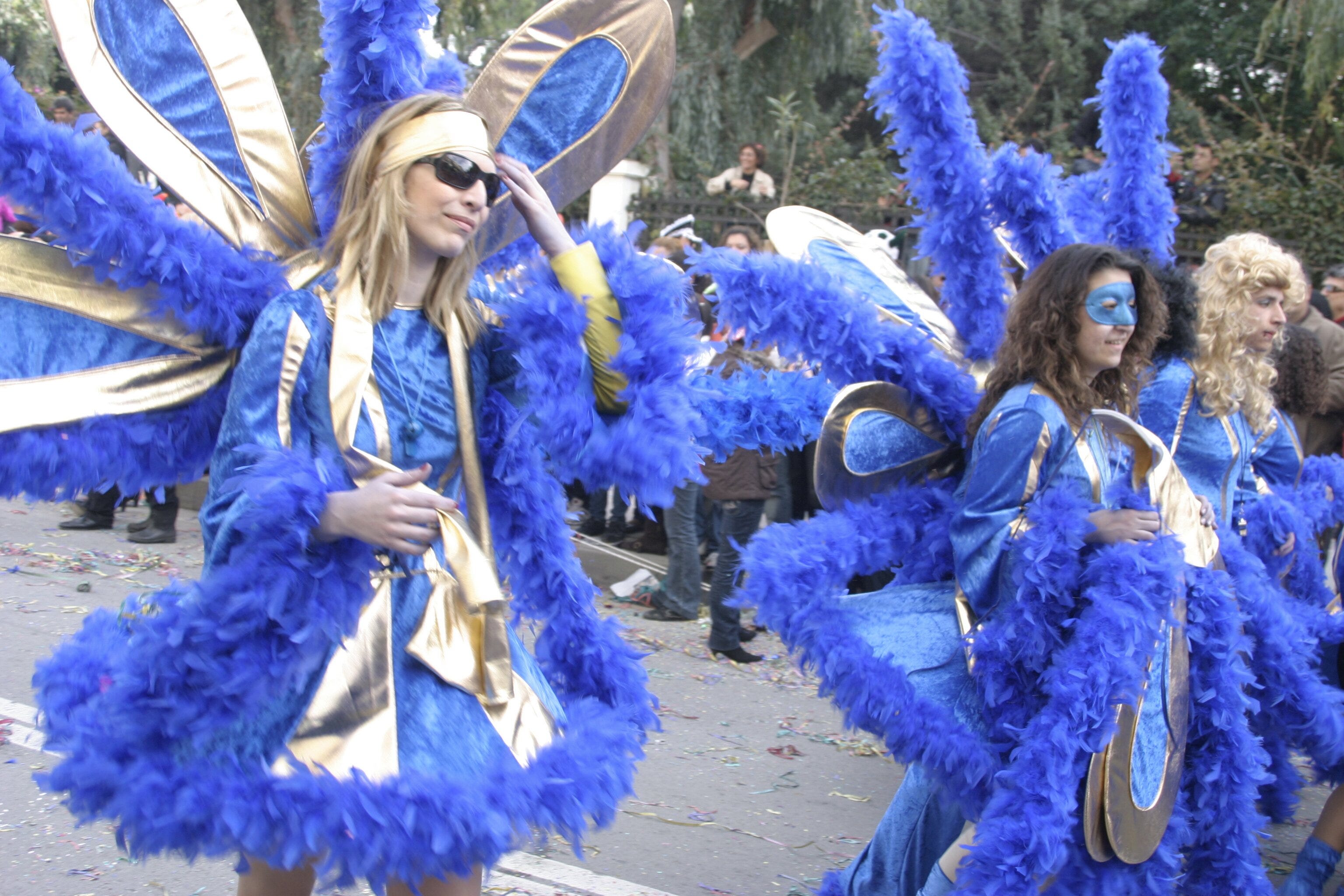
The purpose of Carnival here is often explained in simple terms. It is the festive season before the fasting of Lent. In Greek, Apokries is tied to the idea of leaving meat behind. In practice, though, anyone who has lived through it in Crete knows it is also a social release valve. It is a period when people put on masks, joke publicly, sing in the streets, and take part in the sort of cheerful disorder that villages and towns need. It lets people act bigger than ordinary life for a while. It lets children feel they are part of something old and exciting. It lets communities rehearse belonging. Then, just as the season reaches full colour, it turns, and Clean Monday arrives with kite flying, fasting foods and outdoor gatherings called Koulouma.
A bit of background first
Across Greece, the Carnival season follows the Church calendar and builds over three weeks before Clean Monday. The second week includes Tsiknopempti, the famous smoky Thursday when grills fire up, and meat dominates the day. The final week leads to the last weekend before Lent, with the biggest parades and street celebrations. In 2026, the dates line up very neatly, with Apokries running through February and peaking on Sunday 22 February, followed by Clean Monday on 23 February. Crete follows this same calendar, but the island gives it a distinctly Cretan voice.
That Cretan voice has layers. One layer is Orthodox Christian and communal, tied to the approach of Lent and the idea of cleansing and renewal. Another layer is older and more earthy. Greek cultural sources often point to pre-Christian roots in ancient spring rites and Dionysian celebrations, with disguises, noise, reversals and ritual play surviving in altered forms. Crete is especially good at preserving that kind of layered tradition because village customs here do not sit in museums. They are still performed, adapted and argued over in real life. A modern DJ can be heard in one square while bells, skins and blackened faces appear in another village a short drive away.
And that is why Carnival in Crete is worth knowing. It is not only entertainment. It is one of the clearest windows into how the island handles continuity. Crete is full of places where the old and the new sit side by side without apologising to each other. Carnival is one of the best examples of that.
Rethymno and the making of Crete’s great Carnival city
If one place dominates the Carnival map of Crete, it is Rethymno. Locals and organisers call it the Carnival of Crete, and they do not say that lightly. The city has built a Carnival culture that is not just a parade but a whole civic season, with volunteer groups, a long programme of events, costume exhibitions, serenades, children’s celebrations and the famous Hidden Treasure Hunt that became central to its modern identity.
What is especially interesting in Rethymno is that there is a clear historical memory behind the spectacle. The official Rethymno Carnival material points to humorous public events in 1914, and even earlier evidence of carnival dances going back to 1883 in family circles, with costumed townspeople taking to the streets on the last Sunday of Apokries. That detail matters because it shows Rethymno did not simply copy a parade model in recent decades. There was already a local appetite for carnival play, dancing and street appearances long before the current scale existed.
The organised post war Carnival in Rethymno took shape in the early 1960s. The Rethymno Explorers Club, founded in 1958, is identified as a pioneer of the post war Carnival, and for more than twenty years it helped keep the celebrations alive with floats, costumes and the famous giant heads known locally as kefales. Then came a difficult period in the 1980s when the Carnival was discontinued for a time because of a lack of financial support. That pause is part of the story, too. It reminds you that traditions survive because people carry them, and if the support structure weakens, even beloved customs can falter.
The modern rebirth came through a very Cretan blend of organisation and mischief. In the early 1990s, the Hidden Treasure Hunt helped create the Carnival groups that would become the backbone of the revived event. In 1993, the Municipality of Rethymno stepped in as organiser and supporter, and from then on, the Carnival gained the structure and momentum that made it what it is now. The official history still stresses this point because the groups are not decorative extras. They are the living core of the festival. Without them, there is no real Rethymno Carnival.
By 2026, Rethymno’s Carnival will have become a full month of anticipation and participation. The programme begins well before the final Sunday. There is a costume exhibition, an opening ceremony, musical events and serenades, a Carnival Run, children’s events, and then the build-up to the final weekend. This year’s material places the Grand Parade on Sunday 22 February, with the city openly presenting itself as the island’s great Carnival stage. Even the wording used in local guides has that familiar Rethymno confidence, inviting visitors into a “month-long journey of imagination and joy.”
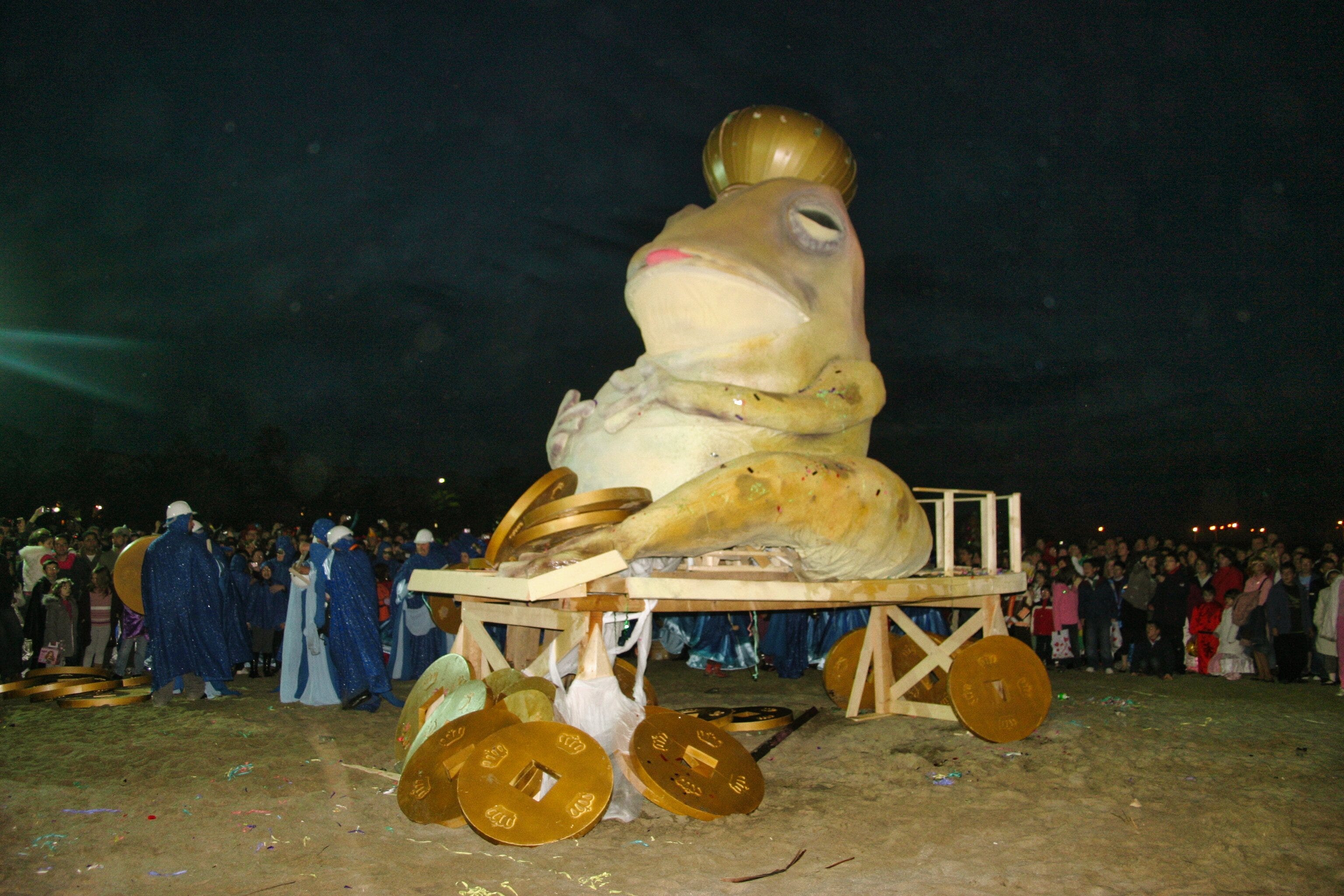
What gives Rethymno its particular tone is the way the city blends street chaos with historical scenery. You can feel it in the references to old serenades and Cretan serenades moving through the Old Town. There is a recurring image of songs threading through lanes and squares before the larger parades arrive. There is also the long-noted idea that Rethymno’s Carnival carries a Venetian flavour, a Renaissance colour, a sense of romance mixed with mischief. That language is not accidental. Rethymno knows that its Carnival works partly because the city itself is a backdrop of layers, and the masks seem to belong there.
On the final weekend, the mood changes from scattered events to full immersion. Children get their own parade. A night parade revives older costumes and a more atmospheric feel. Then the Grand Parade on Sunday turns the whole city into one long moving theatre of floats, groups, masks and noise. Accounts of the Rethymno Carnival always return to the same point. The city feels transformed. People stop behaving as spectators and become participants, even if they only wear a simple mask and stand at the side. You are pulled in.
And then, after all of that, Clean Monday arrives. In the Rethymno area, the change is not a collapse but a continuation in a different key. There are village customs around the city that revive on Clean Monday, and one of the best known examples is in Armeni, where the Mutzouroma celebration has been revived for years as a lively local custom linked to the day of cleansing and renewal. The blackening of faces, the playful disorder, and the community gathering all survive there, reminding you that Carnival in Crete does not end neatly at a city boundary. It spills into the villages and changes shape.
Chania and the western Cretan style of Carnival
Chania does Carnival in its own way, and the 2026 programme shows that clearly. This year, the Chania Carnival parade is centred in Souda, with the big parade taking place on Sunday, 15 February. The official Chania cultural listing presents it as a return “more dynamic than ever,” with a broad set of activities and a theme that translates as Carnival in Motion. It is organised by the Municipality of Chania along with the Region of Crete and the Regional Unit of Chania, working with local business and cultural associations in Souda. That combination of municipal backing and local collaboration is a pattern you see all over Crete, but in Chania it feels especially practical and civic.
It is worth pausing on that, because people often assume Carnival is only a spontaneous thing. On Crete, the spontaneity often sits on top of hard local organising. Municipalities coordinate road use, timing, public spaces and permissions. Business associations support the commercial side. Cultural associations keep local participation alive. Schools and families join in. The result looks effortless when you arrive in the middle of it, but it is built from a lot of local effort.
Chania also carries the western Cretan habit of mixing city celebration with nearby village and neighbourhood customs. The larger urban events draw crowds, but people will also choose smaller gatherings depending on where family and friends are based. Some will do both, and that is very Cretan. You might spend part of the season in Chania, then drive inland or across to another district for a village Clean Monday, and nobody sees any contradiction in that. Carnival is not a single ticketed event here. It is a social season spread across places and relationships.
There is also a Clean Monday municipal gathering in Chania at the grove of the Holy Apostles, with music and celebration tied to Koulouma. Even when the large parade day in Chania falls earlier in the season, the island-wide rhythm still carries everyone toward 22 February and then into the Monday outdoor feasts. This is one of the reasons visitors can get confused if they expect one single “Carnival day” in every town. The final Sunday is the big island-wide climax, but major cities and municipalities may schedule their headline parades on different Sundays within the same Carnival period. Crete does both.
Heraklion and the Kastrino Carnival
Heraklion’s Carnival, often referred to as the Kastrino Carnival, has its own identity and rhythm, and in 2026, its main grand parade is on Sunday, 15 February. The official Kastrino Carnival site makes this very clear, listing the Grand Parade of Carnival Groups for 15 February, and also highlighting the city’s treasure hunt tradition and children’s treasure hunt as central parts of the programme. There is a nice continuity here with Rethymno in the importance of treasure hunts, but the Heraklion version has a more urban Candia-themed energy, often using the city’s historical identity as part of the game and storytelling.
The 2026 Heraklion Carnival material also shows how broad the participation is. The city invites schools, clubs, cultural groups and ordinary teams to join. The treasure hunt is not just a side event for a handful of enthusiasts. It is a major participatory engine that draws people into the season well before parade day. If you want to understand how these festivals function socially, this is a key point. Carnival is not only an event you attend. It is often a project you prepare for. Costumes are made. Teams gather. Themes are chosen. Routes are discussed. Children rehearse. Volunteers organise. That work is part of the pleasure.
By the time 22 February arrives, Heraklion has already had its grand parade, but the city is still very much in Carnival mode. A 2026 notice for Heraklion mentions a traditional Cretan music carnival feast in Lions Square on the evening of Sunday 22 February, followed the next day by municipal Koulouma at Karavolas with Lenten foods offered to the public. This says a lot about Heraklion’s style. Even after the big parade weekend, the city keeps the social and musical thread going right up to Lent, and then carries people into Clean Monday with a large open gathering by the sea.
That Lions Square detail is especially Cretan in feeling. A lot of Carnival coverage focuses only on costumes and floats, but in Crete, the sound of the lyra and laouto matters just as much. When a city closes out the season with a proper Cretan music gathering, it is making a statement about what kind of joy this is. Not only imported carnival imagery. Not only generic party music. Something rooted.
Sitia and the eastern edge in full voice
One of the nicest things about Carnival in Crete is that the eastern side of the island has a strong and lively programme too, and Sitia in 2026 is a perfect example. The Sitia municipal Carnival programme, as reported in local coverage, begins officially on 31 January and runs through the full season with a detailed schedule of events. That is exactly what you want to see if you are trying to understand Carnival as a civic season rather than a single afternoon. It includes hidden treasure hunts for children and adults, Tsiknopempti events, street theatre, a white carnival night, a night parade, and then the big finale on Sunday, 22 February.
The 2026 Sitia programme is unusually rich in texture. There is a children’s treasure hunt in the central square, a Tsiknopempti concert, a street theatre party with the old Cretan comic reference to Vrontakides and Fourtounakides, a white carnival night in the commercial streets, and a night parade the evening before the final Sunday. Then on 22 February comes Carnevale di Sitia 2026 and the Grand Carnival Parade at 16:00 in the central square, followed by a concert and more street party activity along Eleftheriou Venizelou. It is hard to look at a programme like that and still imagine Carnival in Crete as something only Rethymno does properly. Sitia is doing it fully, in its own way, and with obvious local pride.
There is another important point hidden in the Sitia programme. The organisers listed are not only the municipality. You also see municipal communities, music associations, the chamber, local trade associations and entertainment businesses involved. That is the social machinery of Carnival in Crete. It is a web. Municipal authority provides the frame, but the life comes from local groups and trades. In a place like Sitia, where distance from the island’s western centres can sometimes make people feel overlooked, Carnival becomes a way of saying we are here, we are organised, and we have our own style.
Agios Nikolaos and the Lake Carnival
Agios Nikolaos has also built a strong Carnival identity, often centred around the lake and waterfront. The 2026 “Lake Carnival” coverage highlights the main parade on Sunday, 22 February at 16:00, with a route starting at the marina, moving through the town centre and finishing at Lake Voulismeni. After the parade, there is live music by the lake. That route matters because it uses the town’s most recognisable spaces and turns them into a stage. In Agios Nikolaos, Carnival is not hidden away. It walks right through the postcard image of the town.
The phrase “Lake Carnival” is also a clever example of how Cretan towns localise a pan-Hellenic tradition. Everybody shares Apokries and Clean Monday, but each place finds a local anchor. In Agios Nikolaos, it is the lake. In Rethymno, it is the old town and the famous groups. In Heraklion, it is Kastrino and the city centre traditions. In Sitia, it is the central square and the waterfront streets. Once you notice this, Carnival starts to look less like a copied format and more like a map of local identities.
Tympaki and the smaller town Carnival heartbeat
If you want to understand how Carnival breathes outside the large urban centres, look at Tympaki in the Municipality of Phaistos. The 2026 Tympaki Carnival is set for Sunday, 22 February at 14:00 along the main avenue, with municipal support and regional backing. That is a straightforward detail, but it carries a lot of meaning. Tympaki is not trying to imitate a big city's old town parade. It is using its own main street, its own local organising committee and its own social energy. It is a Carnival of place rather than scale.
This is where Carnival in Crete becomes especially worth knowing for anyone who cares about real local life. Smaller towns and villages often produce the warmest moments because you can still see the joins. You can tell who painted the float. You can recognise the family who made the costumes. You can hear the local jokes in the announcements. There is less distance between the organiser and the participant. If you arrive in a place like Tympaki on Carnival Sunday, you are not arriving at a tourist performance. You are arriving at a community day that visitors are welcome to join.
The village customs and the older pulse under the costumes
Now to the part that many people miss, and it is one of the richest parts of the whole season. In Crete, the villages often carry the more archaic and theatrical customs into Clean Monday and the close of Carnival. These are the events that feel less like modern parade culture and more like folk drama.
One vivid example is Kaina in Apokoronas, where a revived Clean Monday custom known as the Camel is described in remarkable detail. Villagers build a camel figure using everyday materials, with baskets for humps and an animal skull at the head, and the procession moves through the village with costumes, bells, furs and blackened faces in a style linked to old mumming and Dionysian themes. Three people animate the camel. The whole thing sounds half comic beast, half village ritual, and that is exactly what it is. It is playful, but it also carries deep memory.
The same source points to Fourfouras in Amari, where a traditional Cretan wedding is reenacted during the season, complete with musicians, mantinades and a staged procession from one neighbourhood to another before the gathering reaches the square. This is a beautiful example of Carnival as social theatre. It is not only masks and dancing. It is a way of performing the structure of village life itself, but with exaggeration, humour and audience participation. Nearby villages such as Meronas and Melidoni also revive customs like Kantis and Moutzouroma, again with wine and lyra and that unmistakable blend of teasing and ceremony.
Other villages and smaller places show different local shades. In Mylos near Elounda, Clean Monday celebrations mix Lenten dishes, live music and, in a very practical Cretan twist, grilled meat for those not fasting. In Fodele, Clean Monday is linked to an orange-themed celebration known as the Golden Apples of the Hesperides, with oranges worked into foods, sweets and raki. In Avdou, Koulouma includes bean soup, fasting food, sweets and local music. In Rouvas, participants appear as bear-like figures in skins and bells, faces blackened, moving in a wild and eerie village dance. You can read these as local curiosities if you want, but taken together, they show something larger, which is that the Cretan countryside still treats Carnival and Clean Monday as active cultural ground, not just a date on the calendar.
This is also where the purpose of Carnival becomes clearest. In the cities, the purpose can look like celebration, tourism and municipal programming. In the villages, you see the deeper social function. These events bring generations together. Children learn the costumes by doing. Teenagers test themselves in public play. Older men and women carry the memory of how things were done and argue over the details. Musicians are needed. Cooks are needed. The square fills. Even people who are not particularly religious still observe the turn toward Clean Monday because the custom belongs to the village as much as to the Church.
How the day of 22 February feels on the island
Because the island is so varied, there is no single script for 22 February, but there is a recognisable pattern.
By this point in the season, costumes are everywhere. Some are carefully made by Carnival groups with themes and choreography. Some are thrown together from wardrobes, old army coats, fake wigs, animal skins, painted faces and whatever can be found. Children are usually in full costume long before the adults are ready. Cafes and bars start feeling festive early. The roads into the parade towns get busier. Music checks are underway. Floats line up out of sight. Municipal workers and volunteers move around with the slightly tired look of people who have been doing logistics for days.
In places with major parades on 22 February, like Rethymno, Sitia, Agios Nikolaos and Tympaki, the afternoon becomes a moving corridor of noise and colour. The route itself is important because it temporarily rearranges the town. People stand where they would not normally stand. They speak to strangers. They wave at friends they only spot because everyone is out. Shopfronts become backdrops. Children dart forward and back. Grandparents sit where they can see everything. The line between participant and onlooker keeps dissolving.
In places where the main parade happened the previous Sunday, like Chania and Heraklion in 2026, 22 February can still be full and lively, but it often feels more like the final communal exhale. Heraklion’s Lions Square event with traditional Cretan musicians is a good example of this. It is not trying to outdo the grand parade. It is closing the season in the city centre with live music and shared space before the cleaner, simpler mood of Clean Monday arrives.
Then the turn comes. By the next day, the masks are still around, but the food changes. The Lent foods appear. Lagana, halva, shellfish, bean dishes, taramosalata and village tables in the open air begin to replace the grilled excess and parade fuel of the previous days. Kites go up. Families move toward fields, beaches and municipal gathering points. The same people who were shouting in costumes the day before may now be standing in the wind with a spool of string, trying to get a kite to rise while music plays nearby. That shift is one of the most human things about the whole season. Crete does not simply stop Carnival. It transforms it.
Why it is worth knowing, especially if you care about Crete
Carnival in Crete is worth knowing because it is one of the few moments when the island reveals so many parts of itself at once.
You see the municipal Crete that can organise large public events and bring thousands into the streets.
You see the old communal Crete that still relies on volunteers, cultural associations and local committees.
You see the musical Crete, where even a Carnival closing event in a city square may centre on lyra and laouto.
You see the village Crete, where face blackening, bells, animal disguises, comic ritual and reenacted weddings keep older forms of social theatre alive.
You see the practical Crete, where every celebration is also a matter of food, timing, roads, weather and who is bringing what.
And you see the emotional Crete, the part that understands joy and austerity as neighbours, not opposites.
For anyone writing about the island, this matters even more. Carnival is not just a colourful chapter. It is a key to the island’s wider character. Crete has always lived with layers of history and identity. Venetian traces, Ottoman traces, Orthodox rhythm, village memory, municipal modernity, tourism, local pride, improvisation, argument, hospitality. Carnival gathers all of that into one season and lets you watch it move in public.
So yes, 22 February is Carnival Sunday this year in Crete. But the better answer is that 22 February is the crest of a wave. The wave begins weeks earlier in hidden treasure hunts, costume workshops, school events, Tsiknopempti smoke and town square concerts. It breaks differently in each place, in Rethymno’s great parade, in Sitia’s full programme, in Agios Nikolaos by the lake, in Tympaki on the main avenue, and in the villages where older customs still walk the roads. Then it runs on into Clean Monday, with kites, fasting food and Koulouma in city spaces and village squares.
If you want to know Crete, it is worth standing inside that wave at least once. Not only to watch it, but to let it carry you for a few hours, mask or no mask, while the island laughs before Lent.